Sunday, October 25, 2015

"GoFormative" " New Technology for a New School Year


In many classrooms, formative assessments are given during the learning process in order to modify teaching and learning activities to improve student attainment, but are difficult to administer and grade in a timely fashion without the assessment's initial purpose getting lost. Goformative.com, a new website that I learned about during ISTE this past summer, has transformed the way in which I assign and grade formative assessments. "Formative" is a user-friendly website which allows teachers to create original or embed preexisting material into short assessments. A simple quiz takes only minutes to create. 

Formative

Intervene in the moments that matter most.


The true beauty of "Formative", though, is the ability to grade - and send feedback about - students' results in real-time. Students were enthused to receive scores and feedback instantly, and as a teacher I find it exhilarating to see and mark students instantly. The first time that I launched the website, I showed the results on the SmartBoard, capitalizing on the pulsing excitement in the room. 


I've been in constant contact with the founders of Goformative.com since my discovery of the website - from a private Google Hangout with one of the primary founders, tweets with them on Twitter, and live chats where I have asked specific questions and received specific responses via email. I look forward to using this program throughout the year and tracking students' progress in a more efficient and exciting way. 

by Mrs. Shira Techiman
Math Teacher and Enthusiast

Tuesday, August 4, 2015

Summer is a fabulous time to learn!

The Frisch Math Department once again is having a successful and productive summer. Various members of the department have taken advantage of a little down time to brush up on their own teaching and technology skills.  Teaching is truly a 12 month job for professionals are serious and devoted as the Frisch Math Department.

The summer learning got off to a great start when Elissa Katz, Shira Teichman, Rhona Flaumenhaft, Sabrina Bernath along with seven other Frisch faculty members attending the ISTE 2015 conference in Philadelphia at the end of June.  The annual three day conference is the the singlest largest edtech gathering of teachers and vendors in the country.  From large ( 400+) lecture sessions to small group settings in the Playground section, Frisch math teachers learned from expert in the field of educational technology and pedagogy.  Besides several hundred daily sessions on blended learning, flipped classrooms, real time assessment to choose from, teachers walked the Expo floor to learn about the latest software and apps in the marketplace. It was an exhausting and inspiring trip that each one of us walked away from with many new and exciting ideas. We can wait to try out all that we learned.

Here is a photo of Rabbi Pittinsky, Director of Educational Technology, Dr.Mindy Furman, Head of the Science Department, Rifki Silverman, Head of Engineering, Ahuva Mantell, Head of the Arts Program, and Rhona Flaumenhaft, math department faculty member up late at night learning how to set up Twitter accounts.

Frisch Faculty collaborating and learning into the night.


A week after ISTE, Frisch math faculty member Elissa Katz was yet again back in school learning.  She attended a week long College Board summer session on AP Statistics at Fordham University. Besides learning the recent changes to the exam, Elissa was given a chance to relearn many ideas from her graduate studies in Statistics with the benefit of newer and more advance technology. She said the teacher and course were "amazing".  Here is a cute picture of her working hard  in one of the sessions.


A highlight of the Frisch calendar for teachers is actually August when Rabbi Tzvi Pittinsky, the Director of Educational Technology, runs his one of kind Technology Boot Camp. His month long schedule of progressive and innovative sessions are highly anticipated each year as teachers look forward to learning from a recognized expert in the world of edtech.

This past Monday, six members of the Frisch math department met with Rabbi Pittinsky to learn about and explore Educanon and Formative. Educanon is a web based tool which allows a teacher to create a virtual worksheet for a preexisting video.  Rather than ask questions about the content discussed in the film at the end, Educanon pauses the video and allows the teacher to ask multiple choice, fill in the blank, and free response questions which it then grades and records the results on a teacher dashboard.  It is a powerful tool to assess student's learning.  Formative is an online formative assessment tool.  By giving your students' a class code, students and  their device of choice are automatically  entered into your "online classroom".  All work they perform with their device is visible to the teacher on their iPad or laptop.   With a choir of "oh" and "ahs" as the two programs were demoed, both Educanon and Formative will be sure to be utilized in your child's math classroom this Fall.

Mrs. Teichman demos Formative to members of the Math Department.


With so much excitement building about the upcoming school year, the math department is eager to get things started.  It is going to be a great year and we look forward to working with your child soon!

Tuesday, March 3, 2015

Math Never Hiberates!!!!

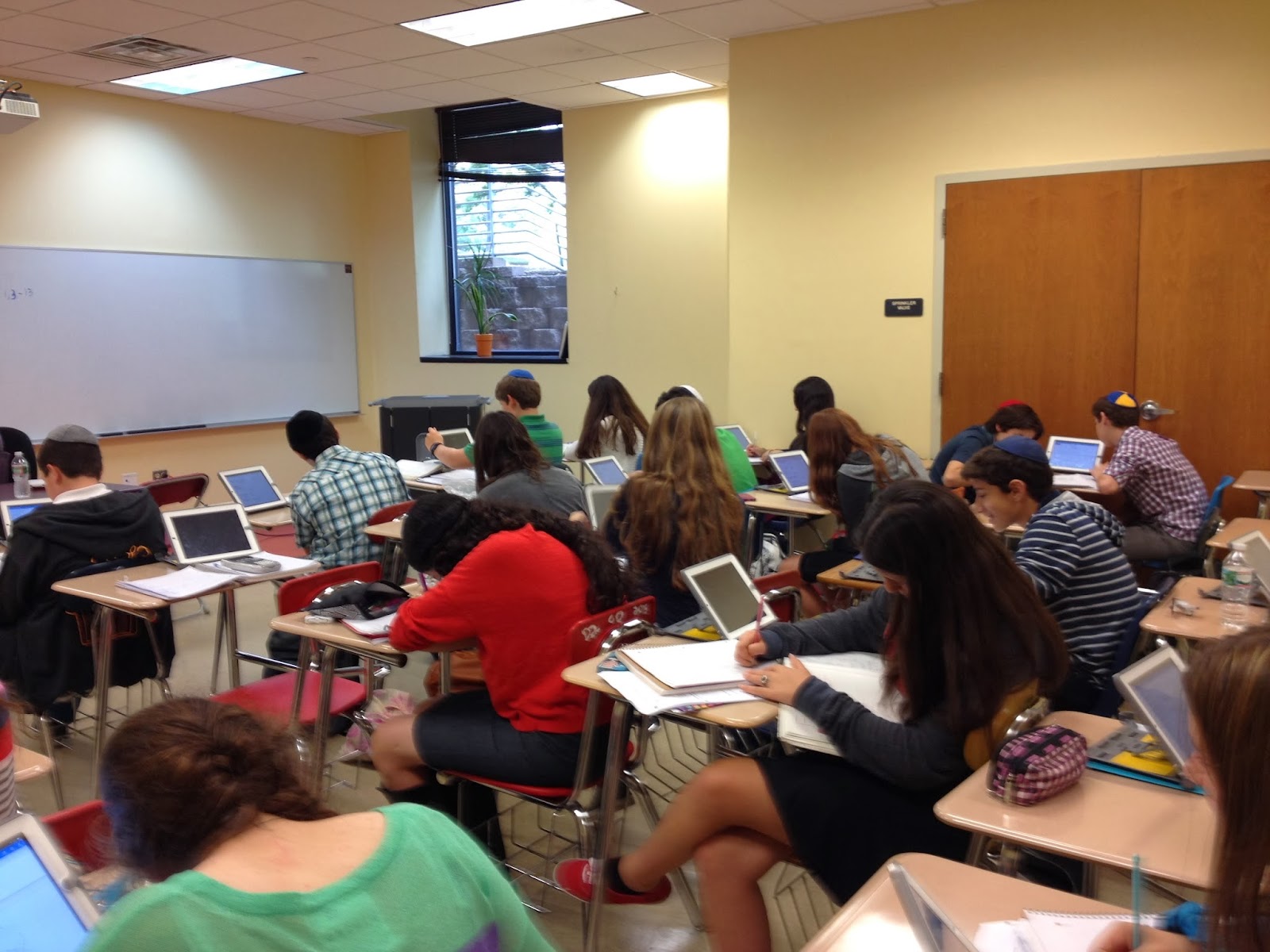
While things might be chilly outside the Frisch math department is far from hibernating.  Besides the exciting teaching occurring in a typical school day, there is a great deal of math being explored both by our students and teachers outside of the classroom.


ipadphoto.JPG

The Frisch Math Team has just taken the 5th out of 6 New Jersey math league contest exam. It is an annual series of contests which ask questions not typical in a high school math classroom. On this past exam one question was “ Suppose a hotel has rooms numbered 1- 14 and keys also numbered 1-14 BUT the room numbers and key numbers do not have to match.  Instead, the keys are assigned to the rooms so that the sum of the room number and the key number is always an exact multiple of 3.  How many ways can this be done?”  Not your average problem ...right?  The answer is at the end of this blog.  Many of our mathematically inclined cougars on this popular “ team” have been getting 6/ 6 on these contests which is nothing less than incredible considering that they only have 30 minutes each contest to complete all 6 questions.  


Even students not on our “Math Team” are welcome to take the American Math Contest (AMC 10 and 12) later this month.  The AMC is a 75 minute multiple choice exam to identify the very best math students in the country.  The AMC 10 covers basic algebra and geometry.  The AMC 12 covers all of high school mathematics with the exception of calculus.  Those who qualify based on their scores in the AMC 12 are given the opportunity to compete in the International Math Olympiad.  We hope Frisch will be represented!


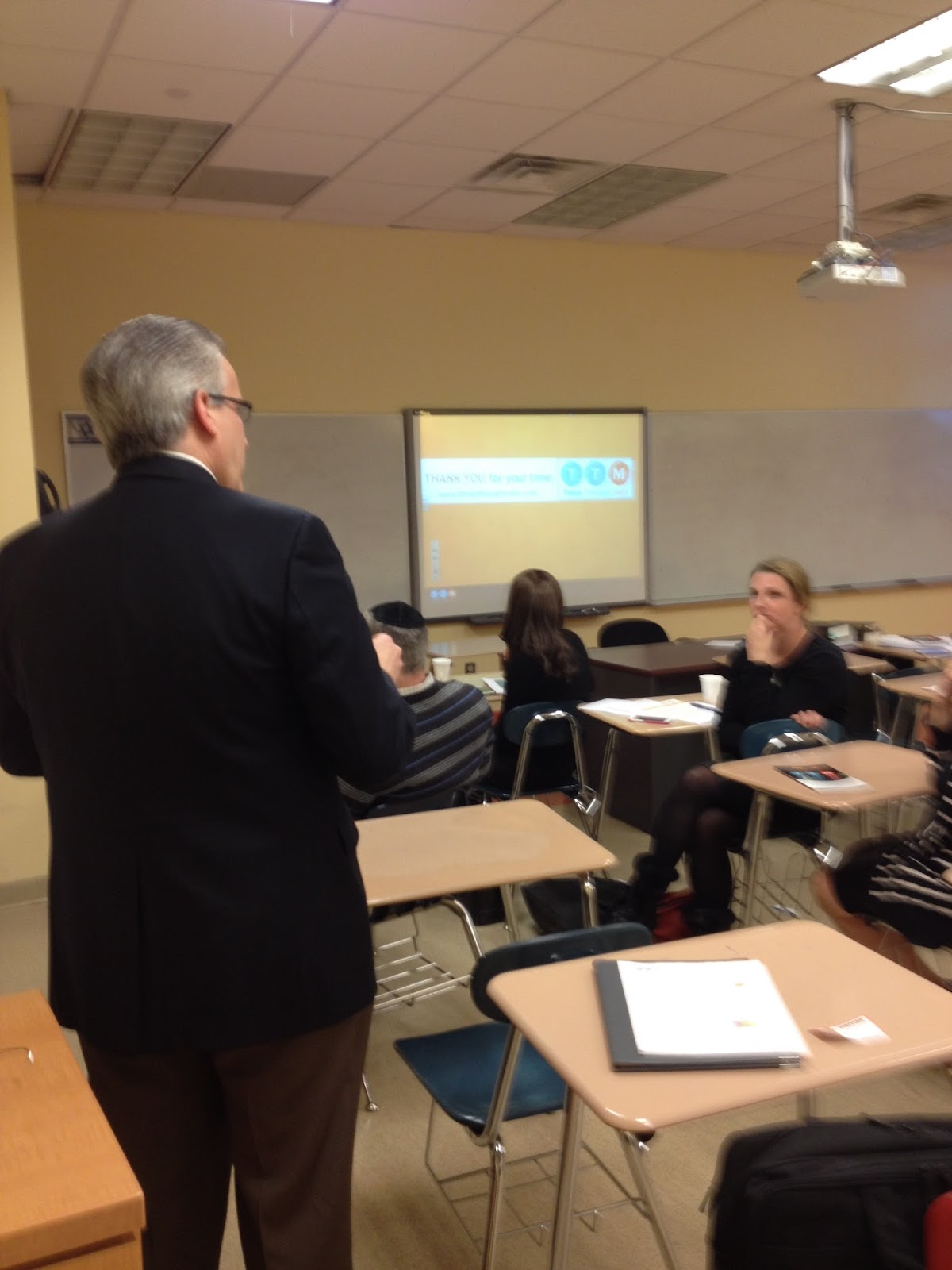
Students are not the only ones busy outside of class time. The teachers of the math department are busy learning about the latest online math programs in their weekly tech meetings.  They recently had an online session with a representative from KnowRe.  This coming week they are having a representative from “Think Through Math”  give an in-person presentation to our whole department.   Texas Instruments and Ten Marks are other vendors they will be meeting in the Spring as they continue to explore the best online math platforms for our students.

photo.JPG


Additionally, to continue to foster their own professional growth, several members of our department will be returning to New Brunswick this March to attend the 29th Annual “ Good Ideas in Teaching PreCalc and…” conference through the DIMAS Center, the Center for Discrete Mathematics and Theoretical Computer Science,  at Rutgers University.  We are honored that our Math Department Chair Mrs. Sabrina Bernath has been chosen to present at this conference for the first time. Her topic is, “The Use of Technology for Differentiated Instruction in Algebra I and Algebra 2”.  She is looking forward to sharing the successful and innovative approaches already being used at Frisch.  


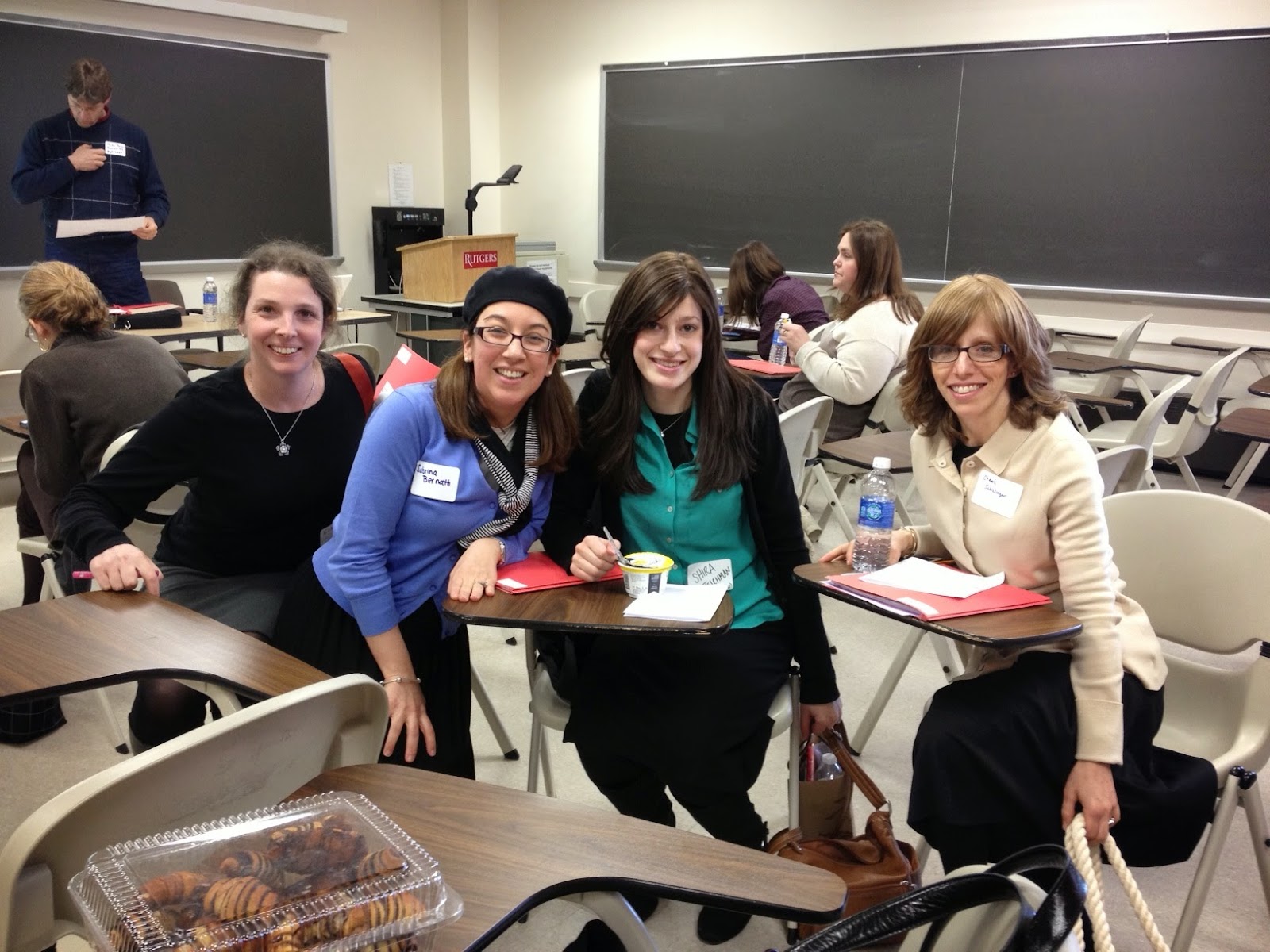
Below is a picture from last year’s PreCalc conference at Rutgers of several Frisch math teachers.  They loved being students once again!
get-attachment.jpg

It is only March so there is still a great deal more math in the coming weeks.  Students and teachers are working hard to have our most productive and successful year yet. By the way the answer to the question about the hotel rooms and the keys is 345,600 but I am sure you already knew that.

Friday, December 5, 2014

Is there more than just giving tests? Reflections on a math PBL by Shira Teichman.


Anyone who knows of my background in Secondary Math Education and/or my current position as a high school math teacher feels obliged, it seems, to email me links to the myriad of math-related articles that are currently riddled throughout Twitter feeds and newspapers.


Many articles have little to no bearing on my teaching (e.g. the private school that I teach in did not need to reorient their curriculum to fit the Common Core), but one recurring topic did truly tug at my pedagogical conscience: TESTS. How much emphasis should we give to students' performance on tests?  Why are tests so anxiety-provoking, to the point that they often hinder students from showing their knowledge masterfully? What are other forms of assessment that can supplement tests? How truthful is the age-old saying, "either you know it [on the test day], or you don't!"?


In an attempt to answer some of these questions, I brainstormed with a colleague and we decided to assign an Independent Study project to be completed once during each of the four terms of this year in two classes that we co-teach. These projects would serve a dual purpose. They would help diminish the weight of tests in the average calculated each marking period. Moreover, these projects would give students the opportunity to apply some of the skills they were learning to real-world scenarios, thereby reinforcing knowledge in the context of an interesting topic of study. 


My "grade-level" sophomore Algebra 1 class does not cease to amaze me; all of them were receptive to, and most of them were quite enthused by, this idea. The students were allowed to choose from a list of topics of study - ranging from the distance from Earth to the Sun during a year's perihelion, to unit pay rates of entertainers like Leonardo DiCaprio as compared to athletes like Koby Bryant. 


The beauty of this Independent Study was that both the teachers and the students worked independently. Once they chose a topic, the students accessed and printed accompanying worksheets from our class website and answered the questions that followed a graph, article, or excerpt of information. Although they were allowed to confer with teachers and classmates, or look on the web for help, students could complete the assignments entirely on their own. Furthermore, as teachers, we worked very "independently"; these assignments were taken from excellent websites such as yummymath.comilluminations.nctm.com, and mathalicious.com, which our Math supervisor mentioned briefly in a summer professional development session after she met some of these site-writers at the ISTE Convention.   


We were amazed with the results of these projects. When we eliminated the build-up of pressure and the frantic race against the 40-or-so minute timer that accompanies a test, the students produced work that showed self-motivationcreativitythoughtfulness,application and retention of skills, and mathematical rigor. We are particularly proud to see our sophomores strengthen their ability to learn and produce mathematical work independently of a structured classroom lesson. Aren't all of these components what we math teachers strive to see students display on a test...?  


Tuesday, November 11, 2014

Blended Learning: The New Normal for Math at Frisch


The math department at Frisch is using technology in exciting and educationally progressive ways.  From real-time assessments to flipped classrooms, our students are being taught using various modes and the feedback and results have been wonderful.

Digital Storytelling: Math Style

In my and Mrs. Elissa Katz’s 12th grade Precalc classes, students have started creating short videos on various self-selected topics listed on a google spreadsheet  The videos created will eventually become part of a video library future Frisch students who take Precalc can utilize.  The students are graded based on a rubric provided by the teachers beforehand and the grade on the video correlates to a test grade. Here is an excellent video by Frisch student Debra Paul ‘15 on solving for the roots of a quartic equation when given one root. Students appreciate the opportunity for an alternative assessment and are honored to be part of the first of many future video libraries of Frisch math classes.

Feedback in Real-Time

In several of the 11th grade Algebra 2 courses, students were given a review sheet with a QR code for this past week’s test.  After completing the problems on the sheet, students submitted their answers via the QR code and got immediate feedback of their grade on this mock assessment. The students’ scores on the review sheet were also emailed to the teachers who gave a participation grade which will then count towards the students’ average. These juniors, many of whom have started studying for the SAT or ACT, have grown accustomed to practice tests and were happy to see that model reflected in their math course.  The day of the exam, students commented that they felt relaxed walking into the test since they already had received quantitative proof confirming they knew the material.  Other students liked the fact that they had prior knowledge of what to work on before the actual test.  Often students don’t know the material as well as they think they do and the problem specific knowledge gained by the real-time assessment positively guided the rest of their review work

Flipping the Classroom

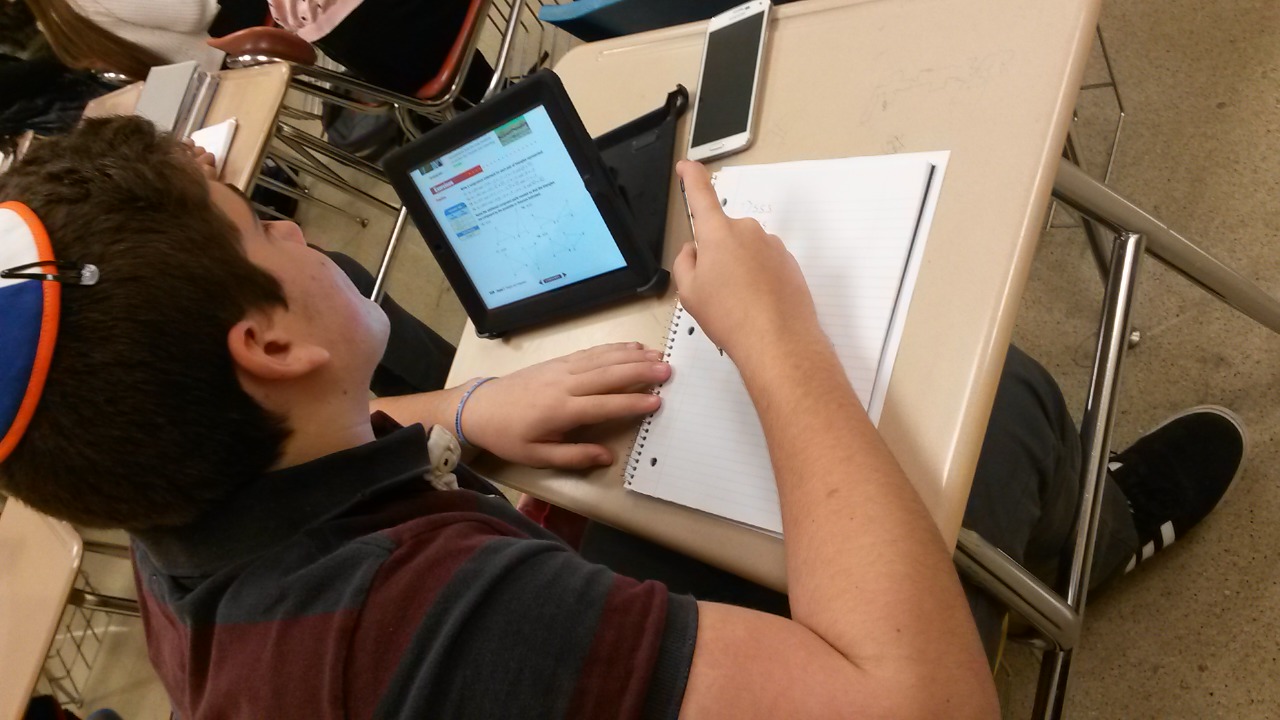
Additionally in a 10th grade honors algebra 2 course my students are starting to learn about piecewise functions from a “Show Me” video I created. Students were also given a worksheet modeled after the examples in the video to work on at home.  The next class was used for further developing the topic rather than introducing it.

  20141106_113149

Self Check Quizzes

The ninth grade Geometry classes of Mrs. Katz, Mrs. Shira Teichman, Mrs. Debbie Stein and Mrs. Chanie Schlesinger have their own unique blended learning opportunities.  The textbook they use has a rich online component.  The students regularly are assigned online self-check quizzes which correlate exactly to the section and topic they are currently learning.  The immediate feedback gives these students and their teachers are better understanding of what exactly the students understand and what they need further review on. It directly affects the pace and depth of the instruction specific to each class of students.

  Math 2 (1)

Differentiated Instruction

Through a grant from the Digital Jewish Network, the first blended learning platform used school wide at Frisch is now in its first year. About 200 students are enrolled in some way in a program created by Educaide.  Two senior classes are in a college preparatory program which reviews skills from Geometry to Algebra 2 based on a student’s performance on an initial diagnostic test.  This differentiated coursework helps prepare the students for future math placement tests at their respective colleges and university.  Several 10th grade classes are enrolled in the program as an extra avenue for test review.  The teachers create a custom problem set tailor to the topics on the upcoming test.  The program gives immediate feedback to both the student and the teacher about their performance on the problem sets. Lastly, some of our students with greater challenges in the basics of math are enrolled in skill building courses which review and solidify basic algebra skills concurrently while they learn Geometry.  It is truly differentiated education at its best.

Other 21st Century Tools

While as shown above there are many large scale blended learning initiatives taking place in the department, individual teachers are also branching out from the traditional reliance on just the textbook.  Teachers are using Desmos, Smart Notebook Math Tools, the Ti Emulator among many other apps and programs.

Math 3

Professional Development

With a strong emphasis on professional development particularly in the area of blended learning, the math department of Frisch bears little resemblance to class just a few years ago and is growing and advancing at a quick pace.  There is still present of course the warmth, support, and humor that has always been a hallmark of the Frisch math department.  Looking forward to future posts about more of the exciting adventures in Frisch math classes!

 -By Mrs. Sabrina Bernath Chair, Math Department

Crossposted from Frisch.org

Monday, September 22, 2014

We are off and running......bring on school year 2014- 2015

School might have been out July and August but the math department kept on learning.  Mrs. Silverman and Mr. Grossman attended intensive week long AP teaching courses in AB calc and BC calc respectively. Mrs. Bernath and Rabbi Pittinsky went to Atlanta for three days to attend the world's largest educational technology conference, ISTE with 15,000 other teachers, students, and educational technology providers.  Additionally numerous math teachers were in attendance during August at Frisch's Seventh Annual Summer Technology Boot Camp learning about the flipped classroom, our new learning management system Haiku, and real time assessment, amongst numerous other software and apps available to them at Frisch.

Without a moment's delay we were up and running, ready to try all that we learned out on our new students.  Below is one example from Mrs. Teichman's 10th grade Algebra 1 class of our progressive and reflective teaching approach.  Never one to simply do the same old lesson, Mrs. Teichman created a wonderful opportunity for collaborative work while developing the students' creative side. Here it is in her own words...

Making Algebra More “Valuable”


I am constantly looking to enrich my sophomore Algebra 1 class, yet I was waiting to introduce any enrichment activity until the students first grew accustomed to our classroom routines and procedures.  Starting on the first day of school, my students proved themselves to be highly motivated, articulate, and cooperative; no math challenge was too difficult for them to try, no student pairing was unsuccessful. Two weeks in, I was ready to try something different.


Problems with Words (aka “Word Problems”)


Our lesson on Cost, Income, and Value Word Problems was, as I expected, a bit more difficult for many of my students. After modeling several such problems and assigning homework,I thought about the main issue: decoding the mathematical language and expressing it algebraically. I thought, "Wouldn't it be beneficial if my students could first see the scenario and then try to formulate descriptive phrases?", and formed the following lesson.


The Plan
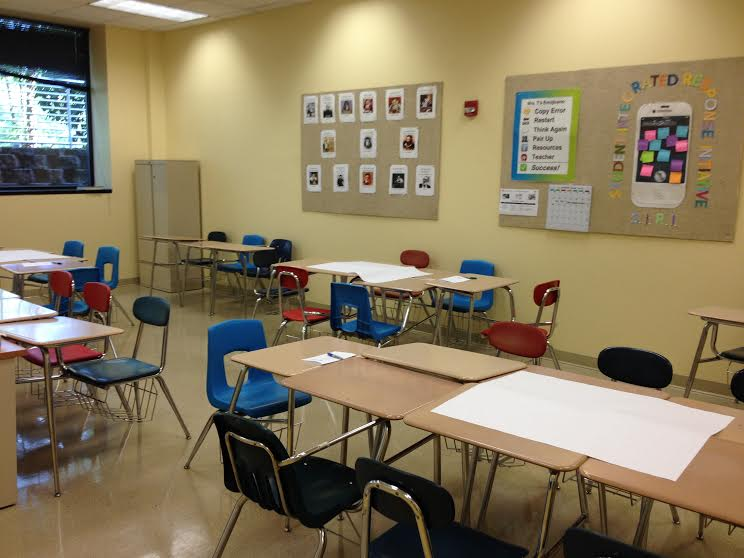


Upon arrival to class, my 18 students would be divided randomly into three groups of six and seat themselves as the three desk clusters that I had made.


Each group would be provided with a piece of lined easel paper, a magic marker, and a pocket with their group name and a series of coins underneath it.
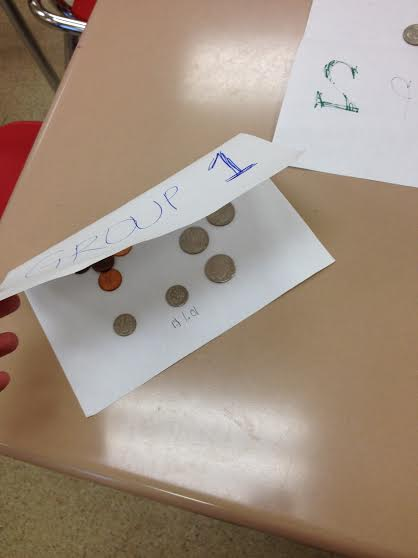


During Round 1, the groups were to write a word problem to describe the amount of coins that they had been given. I encouraged students to use phrases such as “3 times the amount of” “twice as many”, and “4 less than.”

During Round 2, the groups would rotate seats and head to the next table, where they saw a word problem and had to decode the language and arrive at a solution.

During Round 3, the groups would rotate to the third cluster of desks where they saw both the Word Problem and algebraic solution on the easel paper; their job was to check for and correct any errors.  

Finally, during Round 4, groups would return to their original clusters and see their classmates’ solutions (and corrections) resulting from their original word problem.


The Outcome
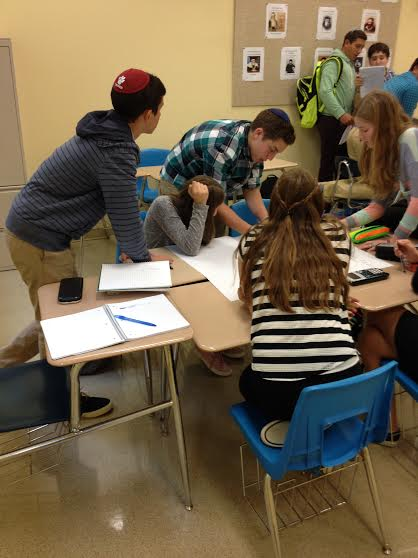


My plan went pretty smoothly, although I had underestimated how much time it would take the groups to accomplish the tasks in rounds 1 and 2. Groups struggled to decide on a word problem whereby one group member came up with a convoluted (and impossible) word problem which his own peers couldn't decipher even with the scenario in front of them. One group arrived at a perfectly solvable word problem, but made careless errors in their solution and therefore could not find an answer.  Yet another group had trouble finding the said error,and simply restarted the solution.
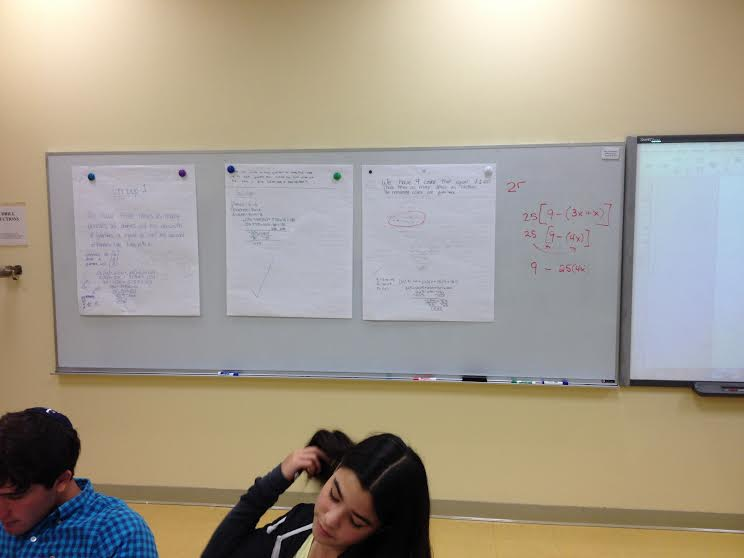


When we regrouped as a class, I posted the posters and led a discussion on "what worked and what didn't" and analyzed each of the group's collaborative works.

Reflections


Before we knew it, class was over, the students filed out, and our busy days rushed onward. Later that evening, I was able to reflect on just how powerful this activity had been for my students.


  • Strong Command of Mathematical Language - Students were able to recognize the meaning of tricky statements like “There are 4 fewer quarters than there are dimes” when trying to describe their amount of coins.
  • Collaboration - This group of sophomores is particularly cooperative in this regard, but the project helped them realize how important it was to communicate and agree when formulating a piece of work.
  • Creating a Word Problem -  Word Problems are often an Algebra student’s worst nightmare. First seeing a solution and cloaking the answers in creative words helped give an entirely different perspective to the task of solving these problems.
  • Pride and Ownership - Having others try to solve their unique creation no doubt gave the students a sense of ownership of the material and pride at creating something mathematically sound. Breathing life into a creative work is an act that colors the English, Creative Writing, and Art classrooms but that, unfortunately, our textbook-based curricula strips from the Math classroom.


I am so proud of my students for their effort and I look forward to continuing to show them how math can be the synthesis of creativity, precision, and collaboration.

-Mrs. Shira Teichman 
Math Teacher and Enthusiast The Frisch School


Sunday, September 21, 2014

Blending Math Class with Student Buy-in

 Here is a link to a reflection I wrote on the JDigitial blog about blended learning in math classrooms.  It is exciting to share with others the knowledge and success we have had at Frisch. Ithttp://bit.ly/1uEwG42